Exterior insulation and finish systems
EIFS & Synthetic Stucco Repair in Eau Claire, WI
Dents, cracks, split sealant joints and wet foam, cut out and rebuilt layer by layer. If the wall needs a moisture test before a patch, we say so first.
Serving Eau Claire, Altoona, Chippewa Falls, Lake Hallie, Menomonie, Fall Creek and the surrounding Chippewa Valley
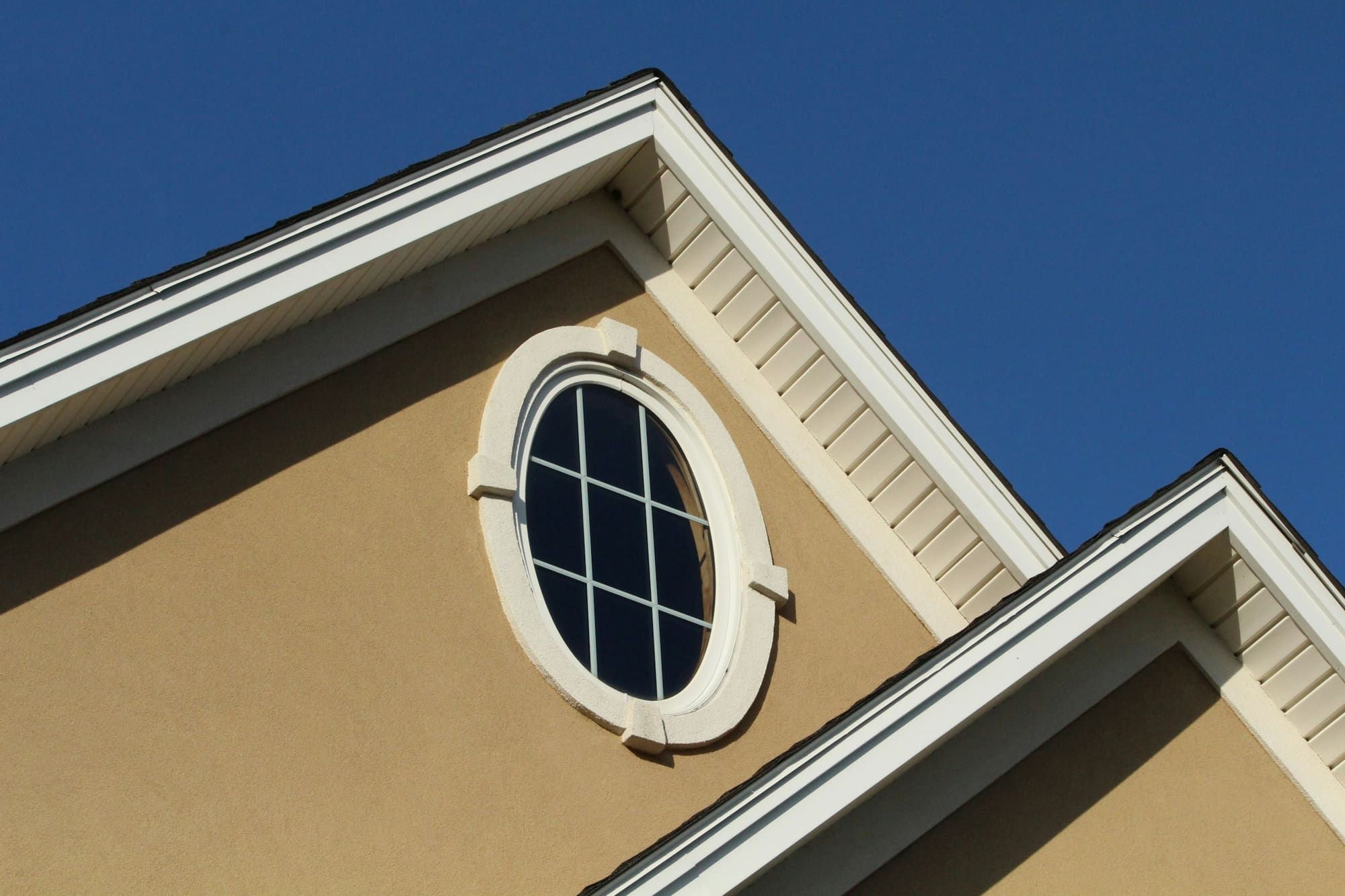
EIFS Repair in Eau Claire: What Goes Wrong With Synthetic Stucco
EIFS is foam insulation board with a thin, hard skin over it. The skin keeps the weather out. Nearly every EIFS repair starts with a break in that skin or in the sealant around it.
It is most common on commercial buildings, such as storefronts, offices and apartment blocks, and it is on some houses built since the 1980s. These are the six failures to look for.
- Dents and punctures. The skin over the foam is thin. A ladder, a hailstone, a snow shovel or a mower deck goes through it, and the hole then takes in water.
- Failed sealant joints. Where EIFS meets a window, a door or a different siding, the gap is closed with sealant. When the sealant splits or pulls away, that joint is an open door for rain.
- Cracks. Usually at the corners of openings or along a line where two foam boards meet. Properly built EIFS should not crack, so a crack always has a cause worth finding.
- Damage at the bottom edge. EIFS run down to the soil or a sidewalk wicks water, gets hit by string trimmers and spends the winter in a snowbank.
- Stains and soft spots. Dark streaks under a window corner, or a patch that feels spongy when you press it, mean water is already behind the skin.
- Woodpecker holes. Foam is easy to excavate, and a neat round hole high on a wall is usually a bird. It needs closing before rain and insects follow.
What Is EIFS? The Layers of an EIFS Wall System
EIFS stands for exterior insulation and finish system. EIMA, the industry's trade association, defines it as a non-load-bearing exterior wall cladding made up of insulation board attached to the wall, an integrally reinforced base coat, and a textured protective finish coat.
It came to the United States from Europe around 1970. It caught on because it puts the insulation outside the framing in one unbroken layer, weighs little, and can be shaped into trim bands, arches and window surrounds by carving the foam.
The base coat and finish together are called the lamina. Remember that word if you read an inspection report: "lamina damage" means the skin is broken, and "delamination" means it has come off the foam.
From the inside out
-
The wall itself
Sheathing over studs, or block or concrete. EIFS carries no load. It hangs on the wall.
-
Water-resistive barrier and drainage
On current systems, a barrier over the sheathing and a thin drainage space, so water that gets behind the foam runs down and out. Older systems have neither.
-
Foam insulation board
Rigid expanded polystyrene, glued or fastened on. This is the "EI" in the name: insulation on the outside of the wall.
-
Base coat with mesh
A thin cement-and-acrylic coat troweled over the foam with fiberglass mesh pressed into it. The mesh is the strength of the whole skin.
-
Finish coat
A colored, textured acrylic coat. It is what you see, and why people call the system synthetic stucco.
EIFS vs Stucco: How to Tell Which One Is on Your Wall
From the street they look the same. Up close they are different materials that fail differently, and a repair made with the wrong one does not last. A third system, DEFS, sits between them.
| Traditional stucco | EIFS (synthetic stucco) | DEFS (direct-applied) | |
|---|---|---|---|
| What it is | Portland cement plaster in two or three coats | Foam board, a mesh-reinforced base coat and an acrylic finish | The same base coat, mesh and finish with no foam, applied to cement board |
| Thickness of the hard part | Roughly three quarters of an inch or more | A thin skin over an inch or more of foam | A thin skin over a rigid board |
| Knock on it | Solid, like knocking on a sidewalk | Hollow, and it gives slightly under your thumb | Firmer than EIFS, but not the dead thud of cement |
| Insulation | None to speak of | Yes. The foam is continuous outside the framing | None |
| Cracking | Some hairline cracking is normal | Should not crack. A crack points to a cause | Minor cracking is possible, and fasteners can ghost through |
| Impact | Hard to dent | Dents and punctures more easily. Heavier mesh helps | Better than EIFS, because the board behind is rigid |
| Patched with | Cement stucco in coats | Foam, mesh, base coat and acrylic finish | Mesh, base coat and acrylic finish |
Three checks you can do yourself
Knock. Cement stucco is hard and sounds solid. EIFS sounds hollow across the whole wall and gives a little when you press hard with your thumb.
Look at an edge. At the bottom of the wall, or where a pipe or light fixture comes through, you can sometimes see white foam behind a thin, hard skin.
Check the trim. Thick raised bands around windows with crisp, identical profiles are usually carved foam.
None of these is proof. Some cement stucco is applied thin over foam sheathing and sounds hollow too. When it matters, we take a small core from a spot that will be patched anyway and look at the layers.
How an EIFS Repair Is Done
An EIFS patch rebuilds the wall's layers in the order they went on. The steps below follow the repair procedures the system manufacturers publish. Skipping the mesh lap or filling a foam gap with base coat saves an hour and shows up as a crack around the patch.
- Find out why it failed. A dent has an obvious cause. A crack or a wet spot does not, and patching it without knowing is how the same repair gets bought twice.
- Cut out the damage. A square cut through the skin and foam down to the wall or the water barrier. Wet foam and anything soft behind it comes out until we reach dry material.
- Check the wall behind. The barrier is repaired if there is one. If the sheathing is dark or soft, the job stops being an EIFS patch and a carpenter replaces it first.
- Fit new foam. Cut tight to the opening. Gaps are filled with slivers of foam, not base coat, because a seam of base coat in the foam prints through as a crack later.
- Grind back the finish around the patch. A few inches of old finish comes off around the hole so new mesh can lap onto the old base coat. Sika's repair instructions for its Senergy systems call for a lap of at least an inch on a patch and two and a half inches over a crack.
- Base coat, mesh, base coat. Mesh is pressed into wet base coat and covered until its pattern disappears. Then it cures.
- Finish to match. Same texture, same grain size, color matched to the faded wall. Manufacturers warn that repairs may stay visible, so on a prominent wall we price refinishing the whole panel to a joint or corner as an option.
EIFS Drainage and Moisture: Barrier Systems vs Drainage Systems
Whether your EIFS has a drainage layer is the most useful thing to know about it. It decides how much a small leak matters.
Barrier EIFS
The original design. Foam is glued straight to the sheathing, with no water barrier or flashing behind it. The skin and the sealant joints are the only defense, so they have to be perfect, and water that gets past them has no way out.
On wood-framed houses that went badly. By the late 1980s and through the 1990s, damage behind barrier EIFS was the subject of lawsuits around the country, and the model building codes no longer allow it on wood-framed walls.
EIFS with drainage
A water-resistive barrier covers the sheathing, and a thin drainage space sits between it and the foam. Water that gets in runs down and out at the bottom. The model codes ask for the system to drain at least 90 percent of that water in a standard test.
EIMA says drainage systems were introduced more than 30 years ago and have been in the building codes since 2009. They forgive a failed sealant joint. They do not forgive missing flashing.
Both kinds need to stop short of the ground. The model residential code calls for EIFS to end at least 6 inches above finished grade. Eau Claire winters are the reason to care: a wall that runs to the lawn spends months with a wet drift against it, and the foam at the bottom freezes and thaws along with the snow.
If you don't know which system you have, the bottom edge often tells you: a drainage system ends in a track or a gap with weep openings, and a barrier system is wrapped and sealed tight. An inspector's moisture probe answers the question that matters more, which is whether the wall behind is dry today.
On an EIFS Wall, the Sealant Joints Are the Maintenance
Walk the building once a year and look at every line of sealant: around windows and doors, at the meter, where EIFS meets brick or siding. Sealant that has cracked, hardened or pulled off one side has stopped working. Cutting it out and resealing costs a fraction of what the water behind it will.
EIFS Repair Cost
National figures from three cost guides, Fixr, HomeAdvisor and Modernize: typical ranges, not quotes. EIFS repair costs more per square foot than cement stucco because a patch rebuilds four layers, and because small areas carry the same setup as large ones.
| Item | Typical range | What to know |
|---|---|---|
| EIFS and synthetic stucco repair | $30–$50 per sq ft | Fixr. Higher than cement stucco at $8–$20, because every layer of the system is rebuilt. |
| Single hole | $250–$450 | Fixr and HomeAdvisor, per hole. Fixr gives this figure for woodpecker holes. |
| Larger EIFS repair jobs | $1,000–$6,000 and up | Modernize. Fixr's high example is $5,000 for work on two EIFS walls. |
| Inspection | $100–$500 | Fixr. Probe-meter moisture surveys are quoted higher by other guides. Paid to the inspector, not to us. |
| New EIFS, for comparison | $8–$12 per sq ft | HomeAdvisor's installed price for synthetic stucco, against $6–$9 for traditional. |
Sources: Fixr stucco siding repair cost guide (updated March 7, 2025), HomeAdvisor stucco repair and stucco siding cost guides (updated June 19 and 20, 2026) and Modernize stucco repair cost guide (updated August 12, 2026). National ranges, checked October 2026.
EIFS Questions: What It Is, EIFS vs Stucco and Cost
What is EIFS in construction?
Foam board fixed to the outside of a building with a thin, mesh-reinforced acrylic skin over it. The letters are short for exterior insulation and finish system. It looks like stucco, which is why it is also called synthetic stucco or EIFS siding, but it is a cladding only and holds nothing up.
What is the difference between EIFS and stucco?
Stucco is cement plaster, hard and heavy, built up in coats to most of an inch thick. EIFS is a thin acrylic and cement skin over foam insulation. Stucco is expected to show some hairline cracks and resists impact. EIFS insulates the wall and should not crack, but it dents and punctures more easily. They are repaired with different materials, so the first step in any repair is working out which one is on the wall.
How much does EIFS repair cost?
It depends mostly on whether the wall behind the foam is dry. A dry dent or puncture is a small job, priced by the hole. Wet sheathing makes it a larger one that includes carpentry, and nobody can price that part until the wall is open. The published national ranges are in the cost table above.
Is EIFS a bad system? Should it be torn off?
No, and usually no. The moisture trouble EIFS became known for in the 1990s involved barrier systems on wood-framed houses, which had no way to drain water that got behind them. Current systems drain. An older barrier system that tests dry and has sound sealant joints can stay, with the joints kept up. One that tests wet needs the wet areas opened and rebuilt, and sometimes more.
Can EIFS be patched with regular stucco or caulk?
It should not be. Cement stucco troweled into a hole in EIFS is rigid, the foam around it is not, and the patch cracks loose at its edge. A smear of caulk over a puncture keeps rain out for a while and is fine as a stopgap until a proper repair, but it is not a repair. The lasting fix uses the same layers as the wall: foam, mesh, base coat and acrylic finish.
Can EIFS be repaired in winter in Eau Claire?
Only with heat. EIFS base coats and finishes are water-based, and manufacturers such as Dryvit call for 40°F or warmer during application and for at least 24 hours afterward. A small patch can be tented and heated. For anything larger we seal the opening against the weather and schedule the repair for spring.
Get a Free EIFS Repair Estimate
Tell us what the building is and what you are seeing: a dent, a crack, a stain, a joint that has opened. A photo of the damage and one of the bottom edge of the wall help us tell which system it is.
- We work out whether the wall is EIFS, DEFS or cement stucco
- You hear plainly if it should be moisture-tested first
- The written estimate lists every layer being rebuilt
Get a Free Estimate
Tell us what's going on with the masonry or stucco. Prefer to talk? Call or text (715) 597-4359.
Thanks, we have your request.
We'll be in touch about your estimate. If it's easier, text photos of the job to (715) 597-4359.
Related Stucco and Stone Veneer Services
-
Stucco Repair
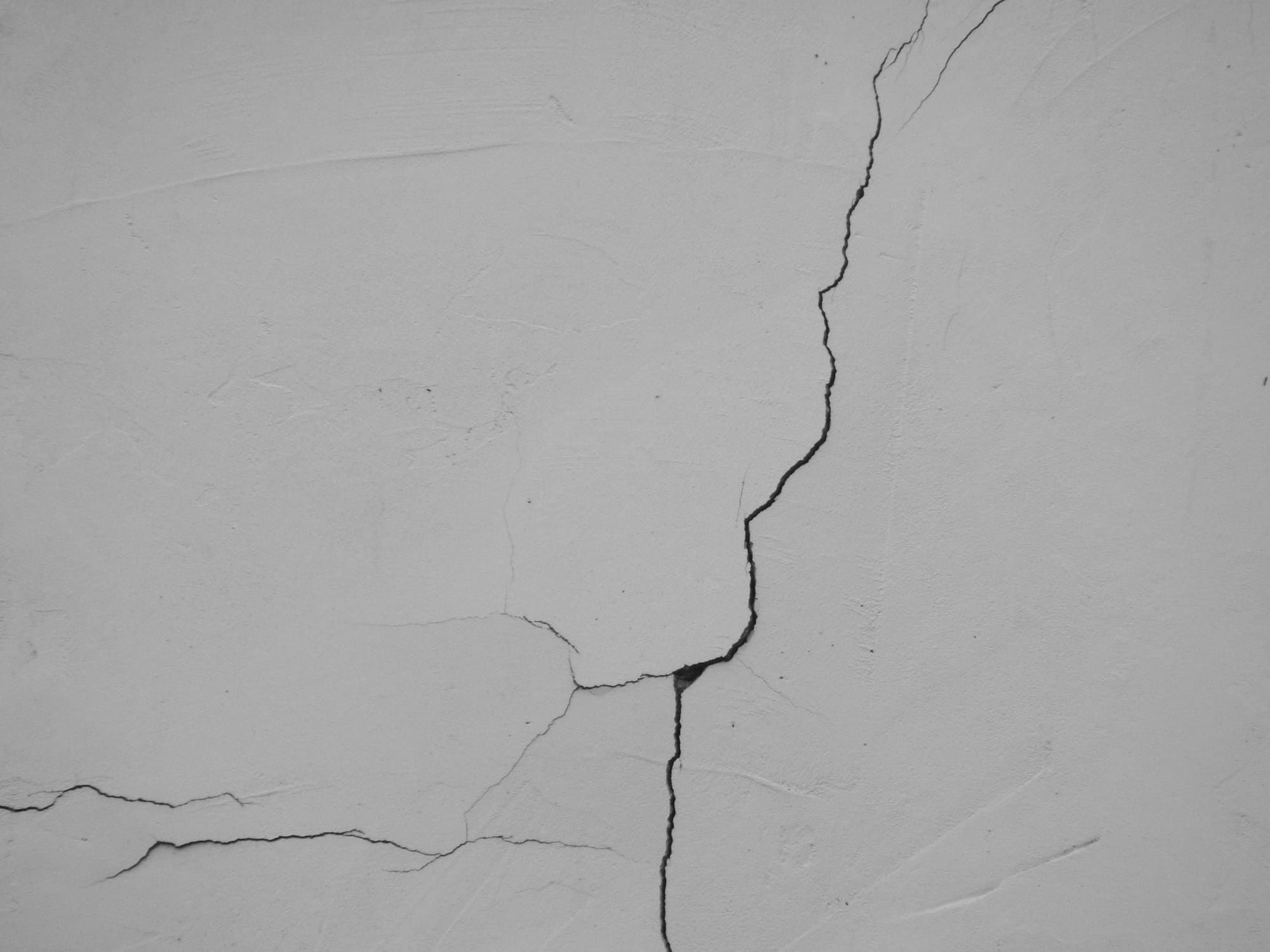
If the wall knocks solid, it is cement stucco, and cracks and patches are handled differently.
-
Stucco Siding Installation
Replacing a failed EIFS wall with three-coat cement stucco is an option worth pricing.
-
Stone Veneer
Stone below, EIFS above is a common front wall. The joint between them is a usual leak point.
A Dent or a Stain in Synthetic Stucco? Text Us a Photo.
Call, text a picture of the damage and the bottom edge of the wall, or use the contact page. Brick, stone and chimney work is listed on our Eau Claire masonry contractor home page.